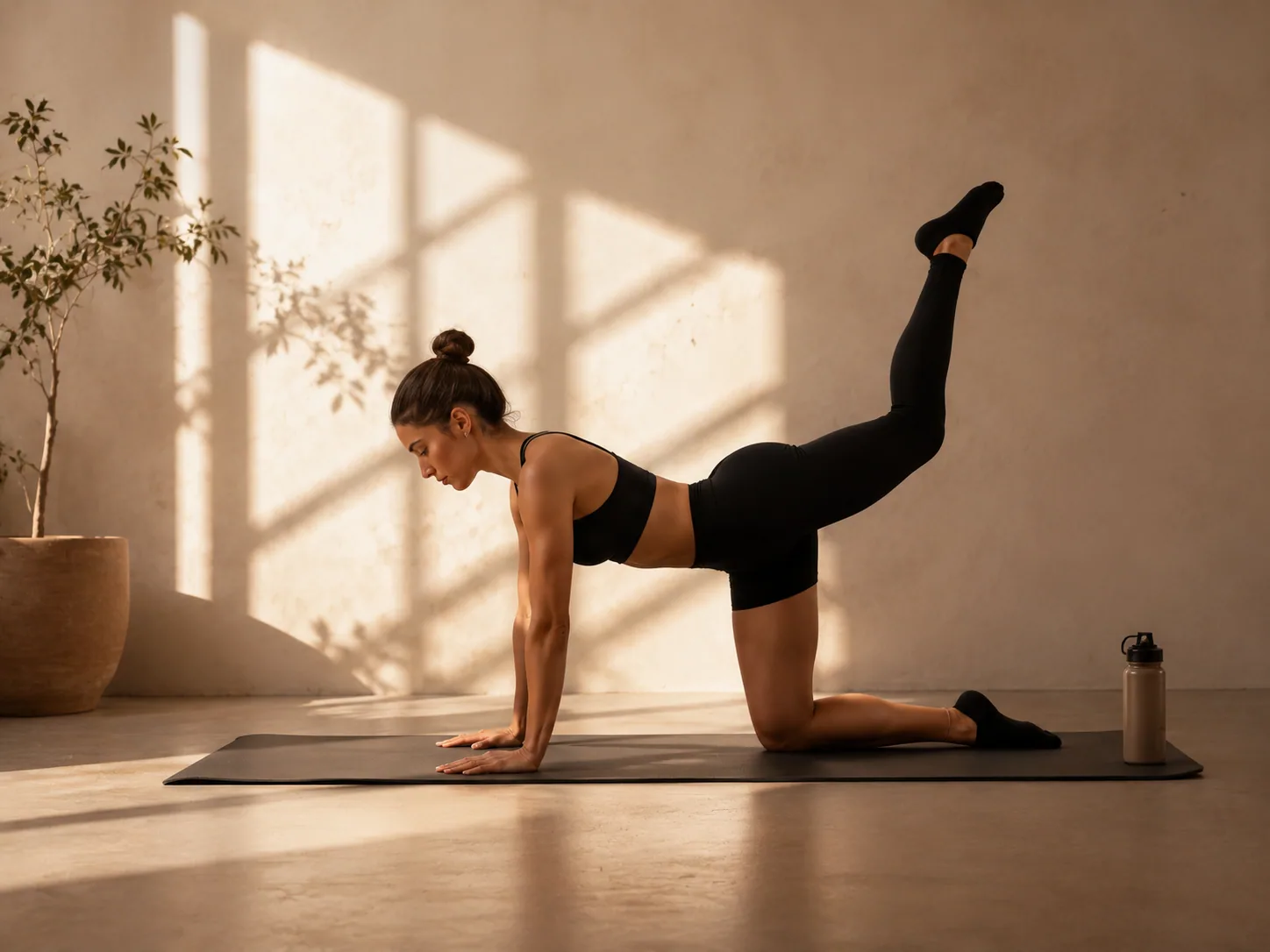
Back pain: the modern epidemic that Hot Pilates can relieve
Sedentary lifestyles, remote work, stress, poor posture… Back pain has become a genuine health crisis. According to Inserm, 80% of French people will experience lower back pain at least once in their lives. In the Paris region, where sitting time often exceeds 10 hours a day, osteopath visits have become as routine as grocery shopping.
But a solution is emerging at the intersection of functional rehabilitation and modern wellness: Hot Pilates. By combining the deep muscle strengthening principles of Pilates with infrared heat, this practice offers a concrete — and scientifically documented — response to back pain. Here's why.
Why is back pain so widespread?
The human back wasn't designed for hours of static positions. Yet our modern lifestyle imposes prolonged postures that weaken the spine:
- Sedentary lifestyle: sitting 8–10 hours a day weakens the deep back muscles (multifidus, spinal erectors) and imbalances the abdominal girdle
- Stress: it causes chronic muscle tension, especially in the trapezius and lower back
- Poor posture: badly positioned screens, slumped shoulders, tilted pelvis… imbalances set in insidiously
- Lack of varied movement: walking, running or cycling doesn't engage the rotator and stabiliser muscles of the trunk
The result? Atrophied deep muscles that no longer play their natural corset role, leaving the spine vulnerable to pain and injury. This is exactly where Pilates comes in.
What science says about Pilates for lower back pain
This isn't a fad: the effectiveness of Pilates against back pain is documented by dozens of clinical studies. A systematic review by the Cochrane Library — the global benchmark for medical data synthesis — concluded that the Pilates method is significantly more effective than standard medical care for reducing pain and improving functional capacity in patients with chronic non-specific lower back pain.
Several mechanisms explain this effectiveness:
- Transverse strengthening: Pilates teaches you to recruit the transversus abdominis, the natural belt that stabilises the lower back
- Postural awareness: exercises retrain the "neutral spine", the ideal position that distributes pressure on intervertebral discs
- Segmental mobilisation: each movement isolates and mobilises a portion of the spine, improving vertebral mobility without jerking
The unique advantage of infrared heat for back pain
Heat has been used for millennia to relieve muscle pain. But infrared heat, which we use at 10.10 Studio, goes far beyond conventional heat.
Infrared heat penetrates tissues deeply — up to 4 cm under the skin — reaching deep muscles and fascia. Its specific benefits for back pain:
- Deep vasodilation: increased blood flow in the paravertebral muscles accelerates the elimination of metabolic waste responsible for pain
- Contracture release: heat reduces muscle stiffness and allows spasmed muscles to relax
- Pain-relieving effect: activation of skin thermoreceptors partially inhibits pain signal transmission to the brain
- Joint range: warm connective tissues are more elastic, allowing postural work without injury risk
How often should you practice Hot Pilates for back pain?
Consistency is key. Clinical studies show significant results from 2 to 3 sessions per week over 8 weeks. At this pace, our students generally experience:
- Pain reduction from week 2
- Improved standing and sitting posture by week 4
- Visible deep back and abdominal strengthening by week 8
- Long-term relapse reduction (beyond 12 weeks)
FAQ — Hot Pilates and back pain
Is Hot Pilates suitable for people with herniated discs?
Yes, subject to medical advice and supervision by a trained coach. Mat-based Pilates exercises allow safe, weight-free work. Infrared heat relaxes the paravertebral muscles that often compensate for the hernia.
Can Hot Pilates replace physiotherapy?
No, and that's not its purpose. Hot Pilates is an ideal complement to physiotherapy. Many physiotherapists recommend Pilates to their patients at the end of rehabilitation to consolidate gains and prevent recurrence.
Is heat dangerous for back inflammation?
In cases of acute inflammatory pain (red, hot back with fever), heat is contraindicated. But for chronic mechanical pain (the most common), infrared heat is beneficial as it relaxes spasmed muscles.
Ready to say goodbye to back pain?
Back pain is not inevitable. Science shows that the combination of Pilates and infrared heat is one of the most promising approaches for lasting relief. It's not a miracle cure — it's a strengthening strategy that addresses the root cause.
At 10.10 Studio in Charenton-le-Pont, our coaches are trained to support people with back conditions. Every class is adapted, every student is guided. Hot Pilates doesn't make unrealistic promises: it builds a stronger back, session by session.